
Device verification before testing
We confirm the assembly type and installation basics so the test results are meaningful and defensible.
Serving Puyallup, Washington & surrounding areas
Backflow testing service in Puyallup, WA
Protect your drinking water with clear scheduling, on-site testing, and straightforward documentation for your records or compliance needs.
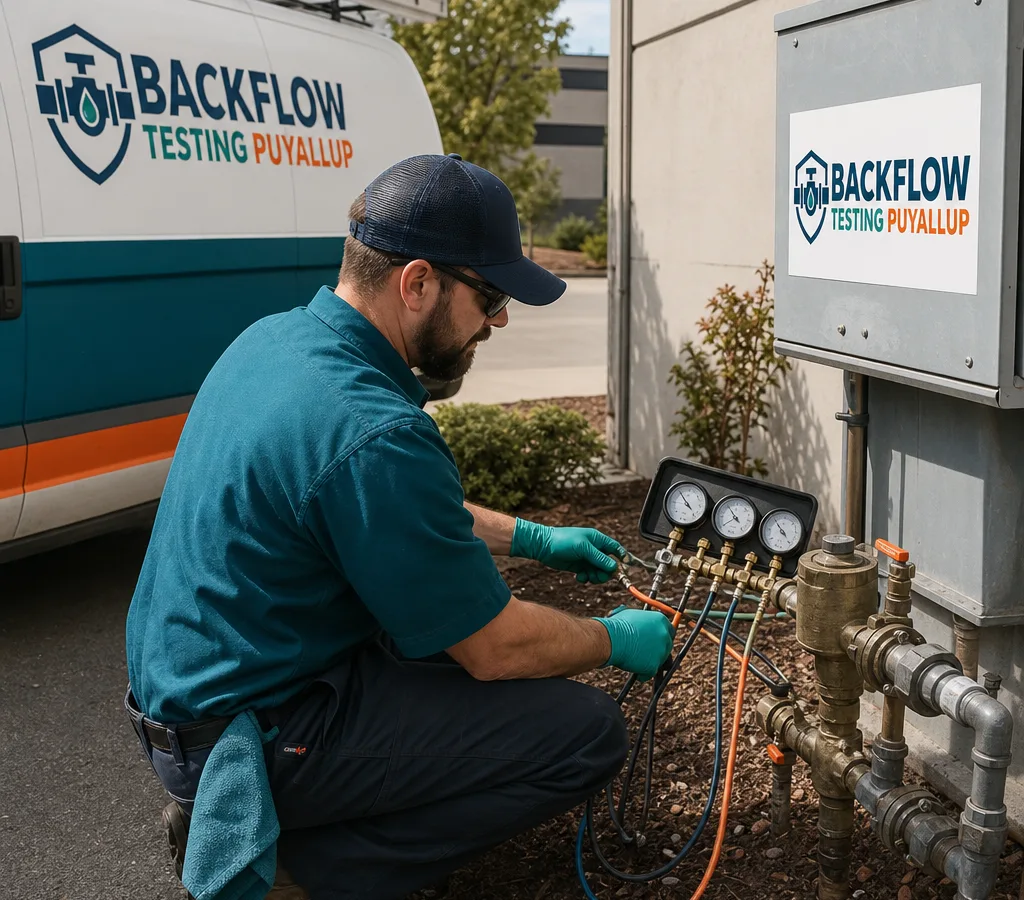
When someone searches Puyallup plumbing for backflow, they usually need one of three things: a backflow assembly tested, a failed device repaired or replaced, or paperwork that matches local requirements for annual certification. Backflow prevention is about stopping contaminated water from flowing backward into the potable water system, which can happen with pressure changes—backsiphonage or backpressure.
Backflow Testing Puyallup handles the plumbing side of that work: verifying the device type, testing it with calibrated gauges, documenting results, and recommending the next step when a unit fails. If you manage a rental, a small business, or a property with irrigation, fire lines, or mechanical equipment, keeping these devices current is part of basic risk management.
If you are getting to know our team, a quick overview of who we are and what we do is available on the Backflow Testing overview.
Measured field verification
A backflow test is only as useful as the details behind it. We start by confirming the assembly and application—for example, irrigation, domestic, or commercial protection—and checking that the shutoffs, test cocks, and relief components are serviceable. Then we run the standard field test procedure for the device type, record readings, and note any conditions that can cause repeat failures.
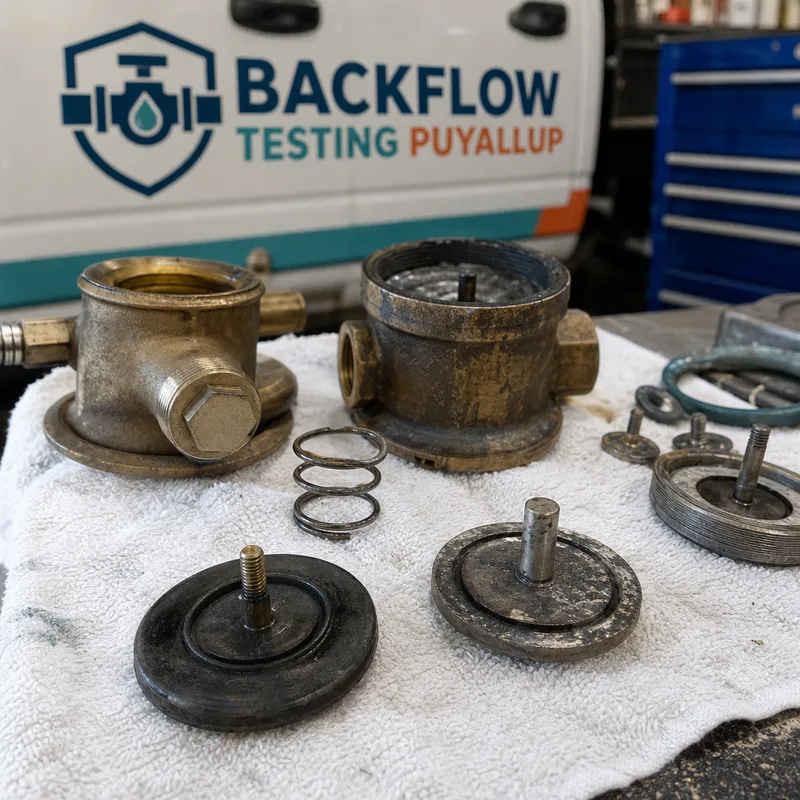
If a device fails, the fix depends on what is wrong. Sometimes it is a rebuild with approved parts. Other times replacement is the right call because of age, freeze damage, corrosion, or a body that will not seal. We will explain what failed, what it means, and what the compliant repair path looks like before any work moves forward.
Because Puyallup homes and light commercial properties often have a mix of older and newer plumbing, we pay close attention to access and isolation. Exterior boxes, tight mechanical rooms, and assemblies set low to grade can change the time on-site and the repair approach, especially during colder snaps when freeze damage shows up.
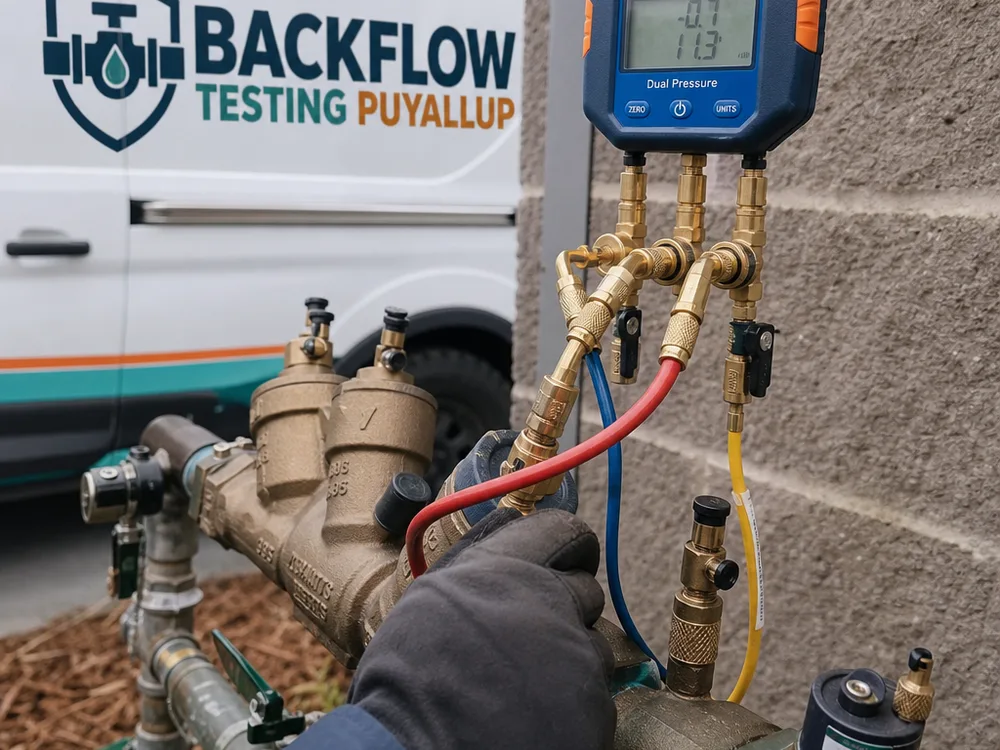
Service standards
We confirm the assembly type and installation basics so the test results are meaningful and defensible.
You get straightforward readings and notes, plus what needs to happen next if the device does not pass.
When a backflow preventer fails, we explain the practical choices: rebuild with approved parts or replacement when the body or internals are compromised.
Annual testing is time-sensitive. We focus on prompt scheduling windows so you are not chasing compliance at the last minute.
We plan isolation and shutdown time up front, especially for multi-tenant buildings and small businesses where downtime matters.
Schedule, test, document
You tell us where the assembly is—yard box, exterior wall, or mechanical room—and whether there are any access restrictions or tenant considerations.
We verify the assembly type, check shutoffs and test ports, and connect the gauge kit for the correct field test procedure.
We perform the test for the specific device type and record readings, conditions, and any installation issues that affect reliability.
We review why it failed and recommend rebuild or replacement based on condition, parts availability, and long-term reliability.
You receive documentation for your records. If you need a specific form format for a water purveyor or property file, tell us in advance so nothing is missed.
Straightforward pricing guidance
Backflow testing in Puyallup typically runs about $150 to $300 for a straightforward, accessible assembly, with higher totals when there are multiple devices to test at one property. A simple residential irrigation device is often at the lower end, while commercial-grade assemblies or hard-to-access mechanical-room setups cost more.
Price changes with the device type—RP, DC, or PVB—number of assemblies, access such as a yard box, tight room, or locked area, shutdown coordination, and whether repair parts or replacement are needed after a failed test. Exact pricing is confirmed at the on-site visit after we verify the installation and scope.
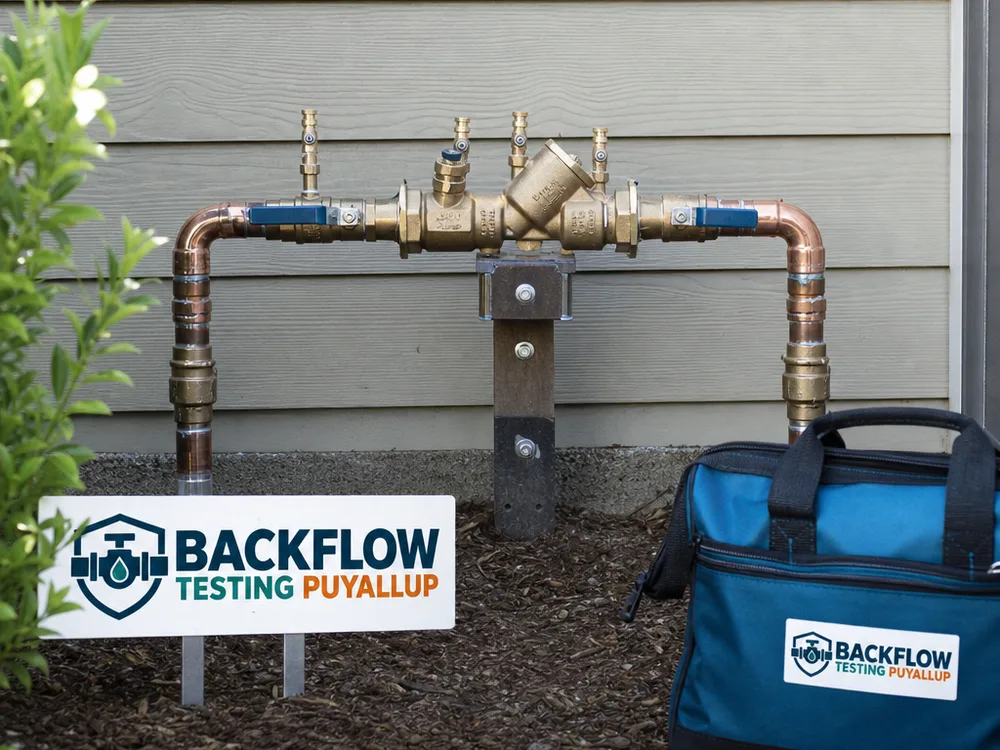
Real assemblies and field conditions
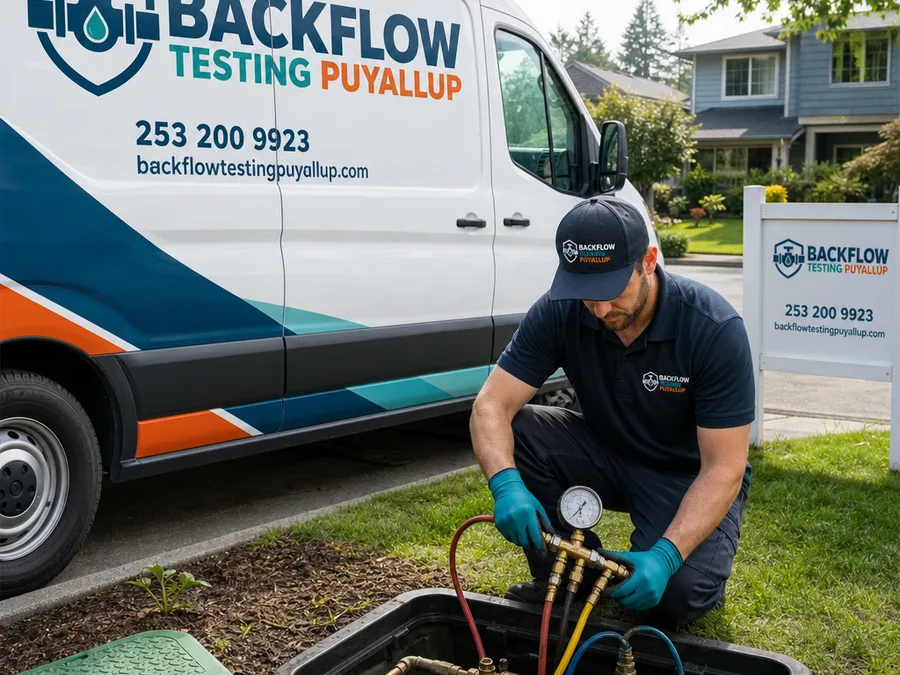
Customer proof
“Scheduling was quick and the technician walked me through what was being tested and what the readings meant. The paperwork was ready right away, which helped with our annual requirement.”
“Our device failed the first test. They explained the options clearly, did the rebuild, and re-tested the same visit. Everything was documented and easy to file.”
Helpful answers
If your water purveyor or property requirements specify annual testing for your backflow assembly, you should treat it as mandatory and schedule it before the due date. Requirements vary by connection type and device, so the safest approach is to follow the notice or compliance schedule tied to your account or building file. If you are not sure what device you have, we can identify it on-site and document what is installed.
If it fails, the next step is a compliant repair—often a rebuild with approved parts—or replacement if the body, shutoffs, or internals are too damaged to restore reliable protection. We explain which part of the test failed and why, then confirm the repair plan and re-test after the work so you have a clear pass result for your records.
Most single-device appointments take about 30 to 60 minutes when the assembly is accessible and the valves operate normally. Time can increase if the assembly is in a tight mechanical room, buried in a yard box, has seized shutoffs, or if multiple devices are being tested at the same property.
Yes. Backflow testing applies to common irrigation assemblies as well as commercial connections where cross-connection protection is required. The key is matching the correct field test procedure to the specific device type installed—for example, PVB, DC, or RP—and documenting it properly.
Often, yes, if the failure is a straightforward rebuild and the correct parts are available for that model. If the assembly is obsolete, heavily corroded, or physically damaged—including freeze damage—replacement may be the more practical option and can require additional planning for access and shutdown time.
Make sure the assembly is accessible, any locked gates or mechanical rooms can be opened, and you know whether shutting off water briefly will affect tenants, employees, or irrigation timers. If the device is in an in-ground box, clearing debris and standing water helps the test go faster and reduces the chance of damaging fittings during hookup.
Ready to schedule?
Tell us what type of property you have and where the device is located. We will confirm access needs, testing requirements, and the fastest path to compliant documentation.